


Introduction
In the rapidly evolving domain of artificial intelligence, traditional Retrieval-Augmented Generation (RAG) systems are being superseded by more sophisticated models that incorporate agentic reasoning and adaptive knowledge retrieval. These advancements herald a new era of self-directed AI capable of dynamic problem-solving and contextual awareness. Traditional RAG systems combine retrieval mechanisms with generative models, enhancing the generated outputs with pertinent information from vast datasets. However, they often struggle with context retention and decision-making autonomy, limiting their application in dynamic environments.

Agentic RAG addresses these limitations by integrating agentic reasoning, enabling the AI to simulate decision-making processes akin to human cognition. This involves leveraging reinforcement learning algorithms and neural-symbolic integration to enhance the AI's ability to reason, plan, and adapt based on environmental stimuli. Concurrently, adaptive knowledge retrieval empowers these systems to dynamically adjust their retrieval strategies using feedback loops and contextual signals, optimizing the relevance and accuracy of the information used in decision-making.
The importance of these innovations cannot be overstated. As AI systems are increasingly expected to operate autonomously in complex, real-world scenarios, the ability to self-direct and adapt is critical. These advancements promise to revolutionize industries ranging from healthcare to finance by facilitating more intelligent, context-aware, and adaptive AI solutions. By transcending the capabilities of traditional RAG systems, agentic reasoning and adaptive knowledge retrieval represent pivotal steps towards achieving true artificial general intelligence (AGI).
Detailed Analysis:
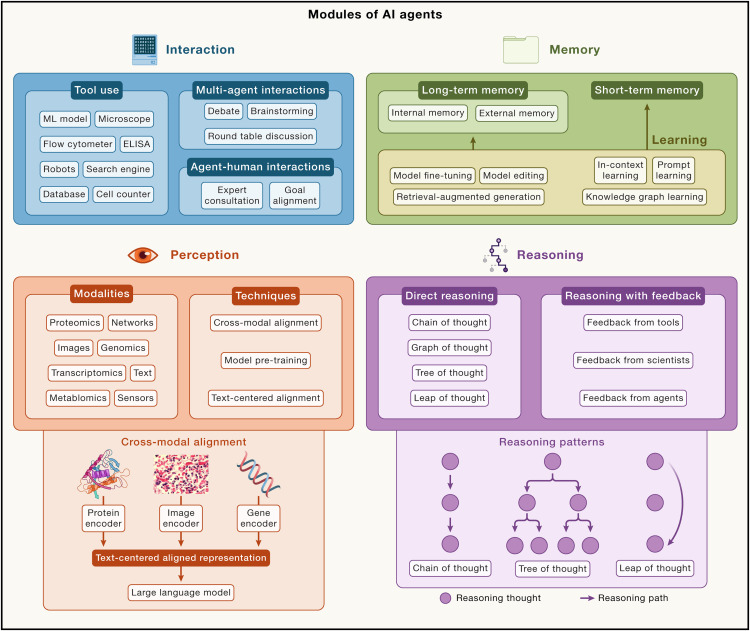
The technical foundation of Agentic Reasoning and Adaptive Knowledge Retrieval systems lies in their ability to autonomously perform complex reasoning tasks and adapt to new information. These systems incorporate advanced machine learning models, particularly transformers integrated with reinforcement learning algorithms, to achieve agentic reasoning. The transformer models, known for their attention mechanisms, enable ARAKR systems to focus on relevant data points, enhancing the precision of information retrieval.
A key aspect of ARAKR is the implementation of adaptive feedback loops, which allow the system to refine its retrieval strategies based on real-time evaluation of output relevance and accuracy. This is achieved through continuous learning processes, where the system updates its knowledge base and retrieval methods in response to new data and contextual shifts. The dynamic nature of this approach contrasts with traditional RAG systems, which often rely on pre-defined, static retrieval paths that cannot adjust to changing contexts or new information.
Mathematically, the reinforcement learning component of ARAKR can be expressed through the optimization of a reward function, R, which evaluates the quality of the information retrieved. The agents are trained to maximize this reward function, using policies π(s) that map states to actions, where s represents the state of the knowledge environment. The value function V(s) estimates the expected reward for each state, guiding the agent's decision-making process. The integration of these mathematical principles ensures that ARAKR systems are capable of making informed, context-aware decisions.
The implications of ARAKR systems are profound, particularly in environments where real-time decision-making is crucial. For instance, in healthcare, these systems can provide clinicians with up-to-date research and treatment options tailored to individual patient needs. In finance, they can analyze market trends and predict shifts with greater accuracy, enabling more strategic investment decisions.
Furthermore, ARAKR systems are instrumental in the development of autonomous systems, such as self-driving cars, where the ability to process and respond to environmental changes in real-time is essential for safety and efficiency. The adaptive nature of these systems ensures that decisions are not only based on historical data but also on the most current and relevant information available, thus enhancing their reliability and effectiveness across various applications.
Future Outlook:
As we look to the future, the trajectory of AI development is set to further embrace agentic reasoning and adaptive knowledge retrieval. One of the significant trends is the increasing adoption of meta-learning techniques, which equip AI systems with the ability to learn how to learn, thus enhancing their adaptability across a broader range of tasks. This approach is expected to reduce the need for task-specific training, allowing AI agents to generalize their learning experiences.
Another promising avenue is the advancement of explainable AI (XAI) within these frameworks. As AI systems become more autonomous, transparency and interpretability will be crucial for building trust and ensuring alignment with human values. Research efforts are likely to focus on developing methods that allow users to understand and verify AI decision-making processes.
However, challenges remain, particularly in ensuring the ethical deployment of such powerful AI systems. Concerns around data privacy, algorithmic bias, and the potential for misuse necessitate the development of robust regulatory frameworks. Addressing these challenges will require a collaborative effort between researchers, industry leaders, and policymakers.
In conclusion, as we progress further into the realm of self-directed AI, the symbiosis of agentic reasoning and adaptive knowledge retrieval will be pivotal. The evolution of these technologies promises to unlock new frontiers in AI capabilities, driving innovation and transforming industries across the globe.